
Gas market stability requires consolidating Forum's role, enhancing cooperation among members, says President Tebboune
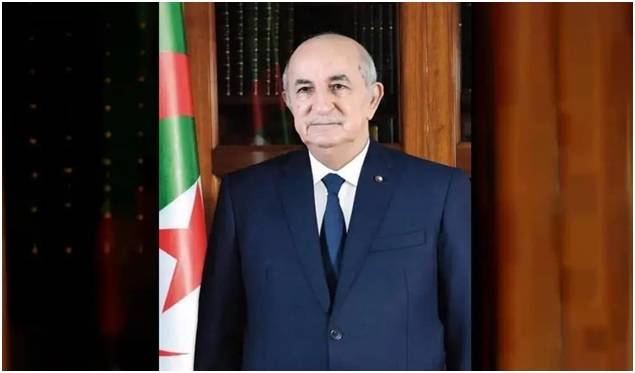
President of the Republic Abdelmadjid Tebboune affirmed Tuesday 27 october 2026, that ensuring the stability of gas markets and the security of supply amid geopolitical tensions requires consolidating the role of the Gas Exporting Countries Forum (GECF) and enhancing cooperation among its members, pointing to the importance of establishing a unified vision for the coming decades.
Addressing the 8th Summit of Heads of State and Government of the Gas Exporting Countries Forum (GECF) in Moscow, in a speech delivered on his behalf by Prime Minister Sifi Ghrieb, the President of the Republic said "the present moment demands consolidating the role of our Forum and strengthening cooperation among its members to ensure market stability and supply security amid geopolitical tensions, and from this platform I call on members to speak with one voice in defense of our shared interests and to bring gas to new markets through South-South cooperation."
"As we mark twenty-five years of working together," he said, adding "let us set a common vision for the decades ahead, titled: gas that is safer and cleaner, a more stable market, and a Forum with greater presence and impact.
Our shared responsibility does not end with our own generations, but extends to generations that are entitled to inherit from us a healthy planet, available energy and a secure future."
The President of the Republic therefore called the Forum, through the Gas Research Institute, headquartered in Algiers, to play a deeper role in spreading technologies that cut emissions, capture, use and store carbon, and improve energy efficiency, drawing on digital tools and artificial intelligence.
The President of the Republic also pointed out that Algeria has been "a pioneer in the gas industry ever since the world’s first natural gas liquefaction complex was built on its soil, in Arzew, in 1964.
He underlined Algeria "is now one of the world’s top ten gas producers and the European Union’s second-largest pipeline supplier, and it ships liquefied gas to many countries around the world."
He said this is "the result of a reliability that has held firm even in the toughest circumstances, and of an unwavering commitment to our obligations."
Algeria, he added, "has been and will remain a safe and dependable supplier," while moving steadily on an ambitious energy transition strategy that makes clean and renewable energy a cornerstone of lasting economic growth."
To balance sovereignty over its resources with the demands of a growing global market, Algeria has launched "a series of major structural projects, chief among them are Gara Djebilet, one of the world’s largest iron ore deposits, and an integrated phosphate project, which they add value to Algeria’s gas resources, boost its export capacity, and support global food security," the President of the Republic added.
The President also spoke about the Trans-Saharan gas pipeline, which is designed to export around 30 billion cubic meters a year, underscoring that it embodies "a shared vision of a united Africa in control of its own decisions" and a South-South cooperation that turns gas into a tool for ending energy poverty and achieving sustainable development.
Algeria, he added, is committed to putting its expertise and capital behind the project’s success.
The President of the Republic added that Algeria is "firmly committed to a just and orderly energy transition that balances climate demands, national sovereignty, and energy security."
Algeria’s ambition, he said, is "clear": "we will not be subject to the energy transition, but will shape it ourselves by lowering the carbon footprint of its industry, cutting methane emissions and flaring, and capturing carbon."
He pointed to the national program to build 15,000 megawatts of renewable energy by 2035, at a cost of roughly 22 billion euros.
He also said Algeria aims to be a "major player" in hydrogen through the Southern Hydrogen Corridor, a project under way with European partners and Tunisia, which will allow Algeria to "export gas, electricity, ammonia and hydrogen and cement its role as an energy hub linking continents."